

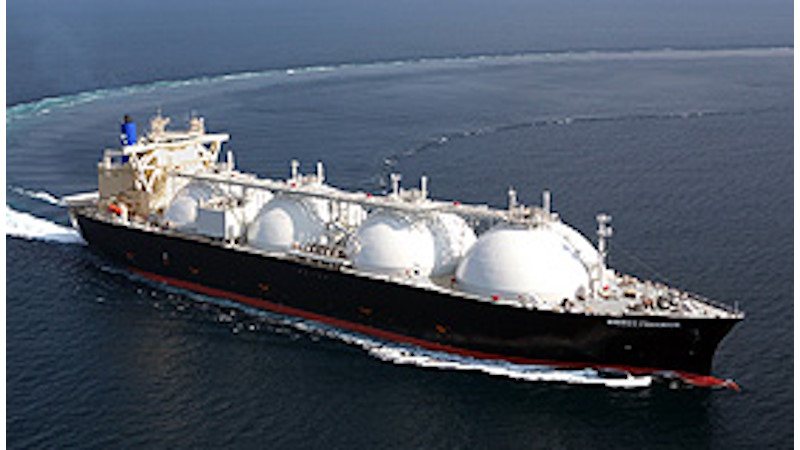
The Green Innovation Fund Project is supported by Japan’s New Energy and Industrial Technology Development Organization (NEDO). The project has a budget of approximately USD 2bn and is designed to demonstrate the entire supply chain for liquefied hydrogen.
Japan Suiso Energy (JSE), which was established to develop the hydrogen supply chain, will lead the project, and Kawasaki Heavy Industries will build the world’s major liquefied hydrogen carrier with a capacity of 40,000 cubic meters at its Sakaide Works. They plan to conduct the first demonstration of loading and unloading and voyages at sea by 2030.
The vessel will have pioneering technology, including a high-performance insulation system to reduce the generation of boil-off gas (BOG) from the cryogenic storage. A double-wall vacuum jacketed piping system will keep the material at an extremely low temperature for efficient and safe transfer between the onshore facility and the liquefied hydrogen tanks on the vessel.
The shape of the hull and the draft have been especially designed considering the low density of liquefied hydrogen. As a result, the vessel will require less power and achieve higher propulsion efficiency.