



This article examines the diverse models used to predict and manage fouling in heat exchangers, from asymptotic and linear approaches to probabilistic and mechanistic frameworks. By analyzing the strengths and limitations of each model, it highlights how engineers can optimize maintenance schedules, improve system reliability, and enhance operational efficiency across industrial applications.
By Omari Hussein Sabuni, Mechanical Engineer, Kinyerezi Power Plant
Heat exchanger fouling represents one of the most significant challenges in industrial process engineering, affecting sectors ranging from petrochemical processing to power generation. This complex phenomenon involves the undesirable accumulation of deposits including scale, sludge, biofilms, and corrosion products on heat transfer surfaces. These deposits create substantial impediments to thermal efficiency, leading to increased operational costs and maintenance requirements by introducing additional resistance to heat flow and fluid movement. The severity and nature of fouling are influenced by multiple variables, including fluid composition, operating temperatures, flow velocities, and material properties of both the heat exchanger surfaces and the process fluids.
Understanding fouling behavior through modeling
The development and application of fouling models have become instrumental in predicting and managing fouling behavior in industrial heat exchangers. These models range from straightforward empirical approaches to sophisticated mechanistic frameworks grounded in fundamental physical and chemical principles. The selection of an appropriate fouling model is crucial and depends on various factors, including operational conditions, system dynamics, and the required level of prediction accuracy.
The asymptotic fouling paradigm
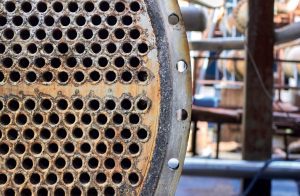 Among the various modeling approaches, the asymptotic fouling model stands as a cornerstone in understanding long-term fouling behavior in industrial heat exchanger systems. This model provides invaluable insights into scenarios where fouling eventually stabilizes, reaching a steady-state condition. The fundamental principle underlying this model is the establishment of an equilibrium between deposition and removal mechanisms, leading to a plateau in fouling resistance over time. The asymptotic model’s strength lies in its ability to capture the self-limiting nature of fouling in many industrial applications. As deposits accumulate on heat transfer surfaces, the increased fluid shear forces naturally counteract further deposition, creating a balance that results in a stable fouling layer thickness. This behavior is particularly prevalent in steady-state systems common to chemical processing plants, power generation facilities, and refineries where operating conditions remain relatively constant over extended periods.
Industrial practitioners have found the asymptotic model especially valuable for predictive maintenance planning. By accurately forecasting when fouling resistance will stabilize, engineers can optimize cleaning intervals and maintenance schedules, reducing unnecessary downtime while ensuring system efficiency. However, it’s important to acknowledge the model’s limitations, particularly in dynamic environments where operating conditions frequently fluctuate. In such cases, the model’s assumption of constant operating conditions may lead to underestimation of fouling severity.
Linear fouling dynamics
The linear fouling model addresses scenarios where deposit accumulation proceeds at a constant rate without significant self-limiting mechanisms. This model proves particularly relevant in systems where the deposition process consistently outpaces natural or induced removal mechanisms. The linear approach offers valuable insights for systems handling fluids prone to scaling, particulate fouling, or high concentrations of contaminants.
In industrial applications, linear fouling patterns are commonly observed during initial operational phases or in environments with continuous exposure to fouling agents. For instance, air-cooled heat exchangers in cement production facilities often exhibit linear fouling behavior due to constant dust exposure. While the model’s simplicity facilitates rapid implementation and quick insights into initial fouling rates, its limitation lies in potential overestimation of long-term fouling resistance, as it doesn’t account for natural removal mechanisms that might emerge over time.
The falling rate phenomenon
The falling rate fouling model addresses a crucial aspect of fouling behavior observed in many industrial applications: the gradual reduction in fouling rate over time. This model is particularly relevant in systems where either the availability of fouling materials diminishes or surfaces undergo passivation processes that inhibit further deposition. The model captures the initial rapid fouling accumulation followed by a progressive slowdown in deposition rate.
This modeling approach has found significant application in oil refining operations, where initial wax or particulate fouling can be aggressive but tends to diminish over time. Similarly, food processing industries benefit from this model’s ability to account for the finite nature of fouling agents in process streams. The falling rate model offers a more nuanced understanding of fouling dynamics compared to simple linear or asymptotic approaches, though it requires detailed knowledge of system-specific fouling mechanisms for accurate implementation.
Threshold-based fouling analysis
The threshold fouling model introduces a sophisticated approach to understanding the critical conditions that trigger fouling onset. This model is fundamental to process optimization and operational safety, as it identifies specific thresholds—whether temperature, velocity, or chemical concentration—beyond which fouling rapidly accelerates. The model’s significance lies in its ability to define clear operational boundaries for fouling prevention. Geothermal power plants exemplify successful application of threshold modeling, where maintaining fluid velocities below specific thresholds effectively minimizes scale formation. The model’s precision in identifying operational safe zones makes it an invaluable tool for system design and optimization. However, accurate threshold determination requires extensive experimental data and careful analysis of operating conditions.
Probabilistic approaches to fouling prediction
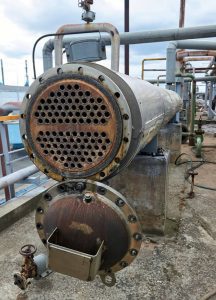 The incorporation of probabilistic elements in fouling modeling represents a significant advancement in addressing the inherent uncertainties of industrial processes. Probabilistic fouling models acknowledge and account for the stochastic nature of fouling phenomena, providing more realistic predictions in systems with variable operating conditions. These models are particularly valuable in environments where process parameters fluctuate significantly, such as wastewater treatment facilities and geothermal plants.
By utilizing probability distributions to characterize fouling behavior, these models offer enhanced decision-making capabilities for maintenance planning and risk assessment. The flexibility to adapt to varying operational conditions makes probabilistic models especially useful in modern industrial settings, though their implementation often requires sophisticated data analysis capabilities and substantial computational resources.
Empirical model applications
Empirical fouling models represent a practical approach to fouling prediction based on operational data analysis. These models excel in providing system-specific insights through regression analysis of historical performance data. While their accuracy within specific operational contexts is typically high, their application is limited to systems similar to those from which the empirical relationships were derived. The pharmaceutical industry, particularly in biopharmaceutical production, demonstrates successful implementation of empirical models for predicting biofouling rates in filtration systems. These models facilitate targeted maintenance strategies and optimize cleaning schedules, though their effectiveness depends heavily on the quality and quantity of available operational data.
Empirical model applications
Empirical fouling models represent a practical approach to fouling prediction based on operational data analysis. These models excel in providing system-specific insights through regression analysis of historical performance data. While their accuracy within specific operational contexts is typically high, their application is limited to systems similar to those from which the empirical relationships were derived. The pharmaceutical industry, particularly in biopharmaceutical production, demonstrates successful implementation of empirical models for predicting biofouling rates in filtration systems. These models facilitate targeted maintenance strategies and optimize cleaning schedules, though their effectiveness depends heavily on the quality and quantity of available operational data.
Mechanistic understanding of fouling
The development of mechanistic fouling models represents the most comprehensive approach to understanding fouling phenomena. These models incorporate fundamental physical and chemical principles governing deposition, adhesion, and removal processes, providing detailed insights into the complex interactions between fluid dynamics, heat transfer, and material properties. The aerospace industry exemplifies sophisticated application of mechanistic models in designing fouling-resistant heat exchangers for extreme environmental conditions.
While mechanistic models offer the most detailed understanding of fouling processes, their implementation requires specialized expertise and significant computational resources. The sensitivity to input parameters necessitates careful consideration of model assumptions and validation against experimental data.
Integration and future directions
The evolution of fouling modeling has led to the development of hybrid approaches that combine multiple modeling strategies to leverage their respective strengths. These integrated models offer improved predictive accuracy while maintaining practical applicability. The selection of appropriate modeling approaches depends on various factors, including the nature of fouling, operational conditions, and required prediction accuracy.
Conclusion
The comprehensive understanding of fouling models provides industrial practitioners with powerful tools for predicting and managing heat exchanger performance. From simple empirical relationships to sophisticated mechanistic models, each approach offers unique insights into fouling behavior. The continued development of modeling techniques, particularly in the areas of probabilistic and hybrid approaches, promises further improvements in our ability to optimize heat exchanger operation and maintenance strategies.
The selection and implementation of appropriate fouling models remain crucial for enhancing operational efficiency, reducing maintenance costs, and improving system reliability across various industrial applications. As industrial processes become increasingly complex and demanding, the role of advanced fouling models in ensuring optimal heat exchanger performance will continue to grow in importance.
 About the author
 About the author
Omari Hussein Sabuni is an experienced mechanical engineer at Kinyerezi Gas Power Plant, specializing in heat exchanger design, optimization, troubleshooting
and providing practical solutions for various heat exchanger problems.
He is skilled in analyzing thermal systems and developing innovative solutions to enhance heat transfer efficiency and adept at conducting feasibility studies, performing risk assessments, and ensuring compliance with industry standards.
About this Featured Story
Why Subscribe?
Featured Stories are regularly shared with our Heat Exchanger World community. Join us and share your own Featured Story on Heat Exchanger World online and in print.