

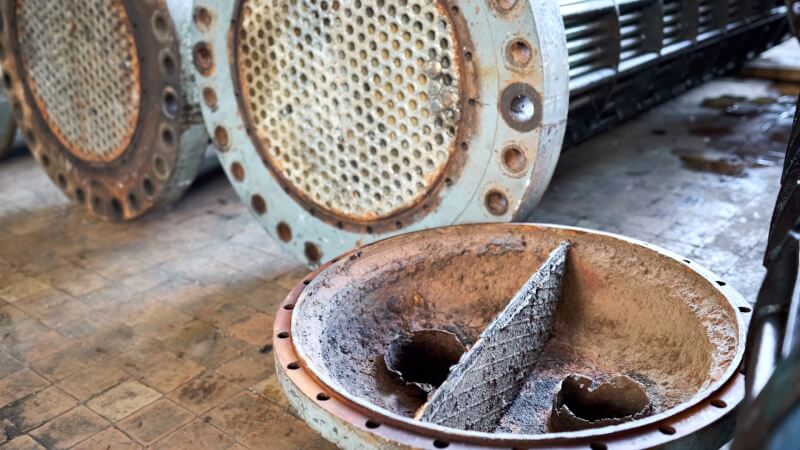

The persistent challenge of fouling in heat exchangers represents one of the most significant operational concerns in process industries today. This phenomenon, characterized by the accumulation of unwanted materials including scale, sludge, biological matter, and corrosion products on heat transfer surfaces, poses a complex challenge that impacts both operational efficiency and equipment longevity. Understanding and assessing fouling has become increasingly critical as industries strive to optimize performance while managing maintenance costs and energy consumption.
By Omari Hussein Sabuni, Mechanical Engineer, Kinyerezi Power Plant
Critical nature of fouling assessment
Fouling assessment stands as a cornerstone of effective heat exchanger management, transcending simple maintenance procedures to become a crucial element of operational strategy. The impact of fouling extends far beyond immediate performance degradation, creating a cascade of effects that can significantly influence overall system reliability and operational costs. As heat transfer efficiency diminishes due to fouling, systems require increasingly more energy to maintain desired process conditions, leading to escalating operational expenses and potential equipment stress.
The significance of effective fouling assessment manifests across multiple industrial sectors, from petrochemical processing to food and beverage production. In petrochemical applications, precise fouling monitoring can prevent catastrophic equipment failure and ensure product quality. Power generation facilities rely on accurate fouling assessment to maintain optimal thermal efficiency and prevent unexpected downtime. The pharmaceutical industry, with its stringent quality requirements, depends on careful fouling monitoring to maintain process stability and product consistency. The benefits of implementing comprehensive fouling assessment programs extend beyond immediate operational improvements. Enhanced operational efficiency through maintained optimal thermal performance translates directly to reduced energy costs and improved product quality. The ability to predict and prevent fouling-related issues minimizes unplanned downtime, while systematic monitoring helps extend equipment life by preventing accelerated wear and corrosion damage.
Performance metrics: Foundation of fouling assessment
Understanding and monitoring key performance indicators provides the foundation for effective fouling assessment. These metrics offer quantifiable insights into system health and fouling progression, enabling operators to make informed decisions about maintenance and operational adjustments. The temperature gradient between inlet and outlet streams serves as a primary indicator of heat transfer efficiency, with any significant deviation from design specifications potentially signaling fouling development.
Pressure drop across the heat exchanger provides another crucial metric for fouling assessment. As fouling deposits accumulate within the exchanger, they create flow restrictions that manifest as increased pressure drops. This relationship between fouling and pressure drop often serves as an early warning system, allowing operators to detect developing issues before they significantly impact thermal performance. The overall heat transfer coefficient (U) represents perhaps the most comprehensive indicator of heat exchanger performance. This value, incorporating all heat transfer resistances within the system, provides a direct measure of fouling impact on thermal efficiency. Regular monitoring of the U-value enables operators to track fouling progression
and optimize cleaning schedules. The relationship between energy consumption and fouling also offers valuable insights, as systems typically require increased energy input to maintain desired process conditions as fouling progresses.
Advanced monitoring technologies and techniques
 Modern fouling assessment has evolved significantly with the introduction of sophisticated monitoring technologies. Non-destructive testing methods now provide unprecedented insight into fouling conditions without requiring system shutdown. Ultrasonic testing techniques can accurately measure deposit thickness and distribution, while infrared thermography reveals temperature patterns that indicate fouling-related heat transfer inefficiencies. Radiographic testing offers detailed visualization of internal fouling deposits, enabling precise targeting of cleaning efforts.
Online monitoring systems have revolutionized the approach to fouling assessment by providing real-time data on critical parameters. Advanced flow sensors detect subtle changes in fluid dynamics that might indicate developing fouling issues. Temperature sensors, strategically placed throughout the system, monitor performance degradation patterns, while pressure transducers provide continuous pressure drop data for early fouling detection.
The integration of these monitoring technologies with sophisticated data analysis systems enables comprehensive performance trending and predictive maintenance planning. Historical data analysis, combined with real-time monitoring, helps establish fouling patterns and optimize maintenance schedules. This data-driven approach ensures that cleaning and maintenance activities align with actual system needs rather than arbitrary schedules.
Integrated assessment methodologies
Effective fouling assessment requires a holistic approach that combines multiple evaluation methods and monitoring strategies. This integrated methodology begins with establishing accurate baseline performance metrics when the system is clean, providing a reference point for future comparisons. Regular monitoring and inspection protocols, aligned with these baseline measurements, enable precise tracking of fouling progression.
The calculation of fouling factors provides quantitative measures of fouling impact, helping operators make informed decisions about maintenance timing and methods. The fouling factor equation, Ro = (1/U_dirty) – (1/U_clean), offers a standardized method for comparing fouling severity across different operating conditions and equipment types. This mathematical approach, combined with physical inspections and monitoring data, creates a comprehensive picture of system health.
Root cause analysis plays a crucial role in effective fouling management, helping identify specific fouling mechanisms and sources. Understanding whether fouling results from chemical precipitation, biological growth, or particulate deposition enables the development of targeted mitigation strategies. This analytical approach ensures that cleaning methods and preventive measures address the fundamental causes of fouling rather than just treating symptoms.
Advanced prevention and mitigation strategies
The implementation of effective fouling prevention and mitigation strategies requires a sophisticated understanding of both fouling mechanisms and available treatment technologies. Chemical cleaning methods have evolved significantly, moving beyond simple acid or alkaline treatments to include targeted formulations designed for specific fouling types. These advanced chemical solutions must balance cleaning effectiveness against potential impacts on heat exchanger materials, requiring careful selection based on metallurgy, operating conditions, and fouling characteristics.
Mechanical cleaning techniques have also advanced considerably, incorporating innovative technologies that improve cleaning efficiency while minimizing system downtime. Modern hydroblasting systems utilize precisely controlled water jets that effectively remove stubborn deposits without risking damage to underlying surfaces. The development of automated pigging systems has revolutionized cleaning procedures in certain applications, allowing for regular cleaning without requiring system shutdown. These innovations in mechanical cleaning have significantly reduced maintenance time while improving cleaning effectiveness.
Operational optimization plays a crucial role in fouling prevention. Advanced flow modeling and computational fluid dynamics (CFD) analysis enable operators to identify and maintain optimal flow velocities that minimize fouling tendencies. Temperature control strategies, informed by sophisticated monitoring systems, help avoid conditions conducive to fouling formation. These operational adjustments, while subtle, can significantly impact fouling rates and system performance.
Water treatment technologies have become increasingly sophisticated, incorporating multiple treatment approaches to address various fouling mechanisms simultaneously. Modern treatment programs often combine chemical additives, advanced filtration systems, and innovative softening processes to create comprehensive solutions for fouling prevention. The integration of real-time monitoring systems with treatment programs allows for dynamic adjustment of treatment parameters based on changing system conditions.
Surface engineering and innovative technologies
The application of advanced surface treatments and coatings represents a frontier in fouling prevention technology. Modern anti-fouling coatings utilize novel materials science developments to create surfaces that actively resist fouling accumulation. These coatings work through various mechanisms, from creating ultra-smooth surfaces that minimize fouling adhesion to incorporating active compounds that discourage biological growth or scale formation.
Automated cleaning systems have emerged as a transformative technology in fouling management. These systems range from simple automatic brush systems to sophisticated robots capable of navigating complex heat exchanger geometries. The integration of artificial intelligence and machine learning algorithms has enhanced the capability of these systems to adapt their cleaning patterns based on fouling distribution and severity.
 Economic impact and performance optimization
 Economic impact and performance optimization
The economic implications of effective fouling management extend far beyond direct maintenance costs. A comprehensive economic analysis must consider multiple factors, including energy efficiency, production capacity, maintenance requirements, and equipment longevity. Advanced fouling management programs can deliver substantial cost savings through reduced energy consumption, with some facilities reporting energy savings of 15-30% through improved fouling control.
The impact on system reliability and maintenance scheduling represents another significant economic consideration. Predictive maintenance strategies, enabled by sophisticated fouling monitoring systems, allow facilities to optimize maintenance intervals based on actual system conditions rather than fixed schedules. This approach not only reduces unnecessary maintenance but also minimizes the risk of unexpected failures that could result in costly emergency shutdowns.
Equipment life extension through effective fouling management provides substantial long-term economic benefits. By preventing accelerated wear and corrosion damage associated with severe fouling, facilities can significantly extend the operational life of heat exchange equipment. This life extension, combined with reduced maintenance requirements and improved energy efficiency, contributes to a compelling return on investment for advanced fouling management programs.
Future trends and emerging technologies
The future of fouling assessment and management promises even greater advances through the integration of emerging technologies. The development of smart sensors and Internet of Things (IoT) connectivity enables increasingly sophisticated real-time monitoring and control systems. Machine learning algorithms are beginning to demonstrate remarkable capability in predicting fouling trends and optimizing cleaning schedules based on historical and real-time data.
Nanotechnology applications in surface treatments and coating systems show promising results in fouling prevention. These advanced materials can create surfaces with unprecedented fouling resistance while maintaining excellent heat transfer characteristics. The combination of these new materials with traditional prevention methods offers the potential for significant improvements in fouling management effectiveness.
Conclusion
The comprehensive assessment and management of fouling in heat exchangers require a sophisticated integration of monitoring technologies, prevention strategies, and economic considerations. Success in this area demands a balanced approach that combines technical expertise with practical operational experience. As technology continues to advance, the opportunities for improving fouling management will continue to expand, offering new possibilities for enhancing heat exchanger performance and reliability.
About the author
 About the author
Omari Hussein Sabuni is an experienced mechanical engineer at Kinyerezi Gas Power Plant, specializing in heat exchanger design, optimization, troubleshooting and providing practical solutions for various heat exchanger problems.
He is skilled in analyzing thermal systems and developing innovative solutions to enhance heat transfer efficiency and adept at conducting feasibility studies, performing risk assessments, and ensuring compliance with industry standards.
About this Featured Story
Why Subscribe?
Featured Stories are regularly shared with our Heat Exchanger World community. Join us and share your own Featured Story on Heat Exchanger World online and in print.